
Practical advice · 19 November 2026
A locker full of lifejackets is not the same as a set ready for the people coming aboard. Before your next outing, bring them into good light and work through them individually. The aim is simple: a suitable, serviceable jacket that fits each wearer and that they know how to use.
Start with the label, not the colour
Identify the make, model, size range and inflation system. Find the instructions for that particular jacket, especially if it came with a second-hand boat. A familiar-looking cover does not prove that the components inside match another jacket on board.
The RYA’s guide to personal flotation devices explains the distinction between lifejackets and buoyancy aids. Foam buoyancy aids support an active wearer but do not turn an unconscious person face-up. Choose equipment for the activity, conditions and wearer; do not assume all flotation devices do the same job.
Separate everyday checks from servicing
Inspect the cover, straps, stitching and fastenings for damage. On an inflatable jacket, follow its instructions when checking the cylinder, activation system and any expiry dates. A jacket that looks tidy externally can still have a problem inside.
The RNLI’s lifejacket maintenance guidance recommends regular owner inspections alongside an annual service. It highlights loose screw-in cylinders and corrosion, and warns that modern jackets can be difficult to repack correctly. If you are unsure, use the manufacturer’s recommended service agent.
Do not improvise repairs or copy a repacking method from a different model. Put any questionable jacket aside and arrange a suitable replacement for the trip. Writing “needs checking” on a list is useful only if nobody then wears it by mistake.
Check the instructions behind the service date
Service advice is not identical across every product. For example, Spinlock’s Deckvest guidance, last updated in September 2023, describes annual self-inspection and recommends professional servicing every two years. That is product guidance, not a universal interval for other brands.
Record what your own manufacturer specifies and what work was actually completed. If instructions seem inconsistent with other advice, ask the manufacturer or its approved service centre before relying on the jacket. Do not treat a general boating article as permission to extend a service interval.
Fit it to today’s clothing
Ask everyone to put their jacket on before departure. The RYA advises a snug fit over clothing, untwisted straps and correctly adjusted crotch straps. Recheck the fit when layers change: a jacket adjusted over a thick coat may be loose over a shirt.
Show each person the manual inflation handle, whistle and other fitted features using the manufacturer’s instructions. Make this a calm introduction alongside the boat, not a hurried explanation while leaving the berth.
A useful record for the boat
- Give each jacket a simple reference number and record its model and size.
- Keep its instructions and service paperwork together.
- Note dated components, checks due and any unresolved defects.
- Match suitable jackets to the people aboard before every trip.
This is equipment-care advice, not a statement of carriage or wearing rules for Ireland, the UK or Spain. Whether your boat is in an Irish harbour or around Jávea and Dénia, build the checks into your routine. Maritime Expert’s own-boat tuition offers a practical setting to develop crew briefings and onboard habits.
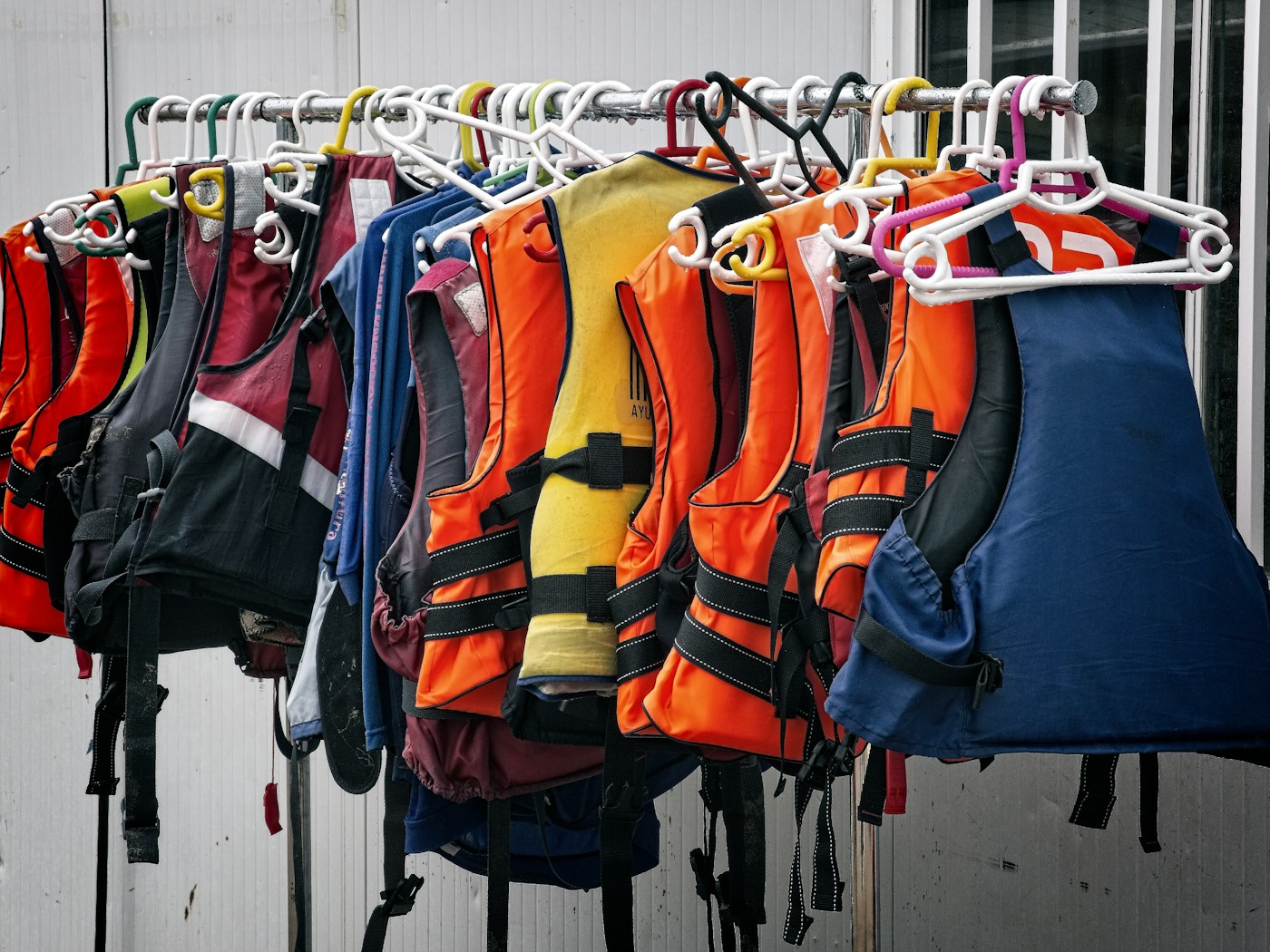
Illustrative stock photograph: foam flotation vests, not the inflatable models discussed. Photo by Miguel A Amutio on Unsplash.



Leave A Comment