Why Boat Trailer Servicing Matters: Don’t Let Your Trailer Be the Weakest Link
1 November, 2025
Site Author
2.9 Minute Read
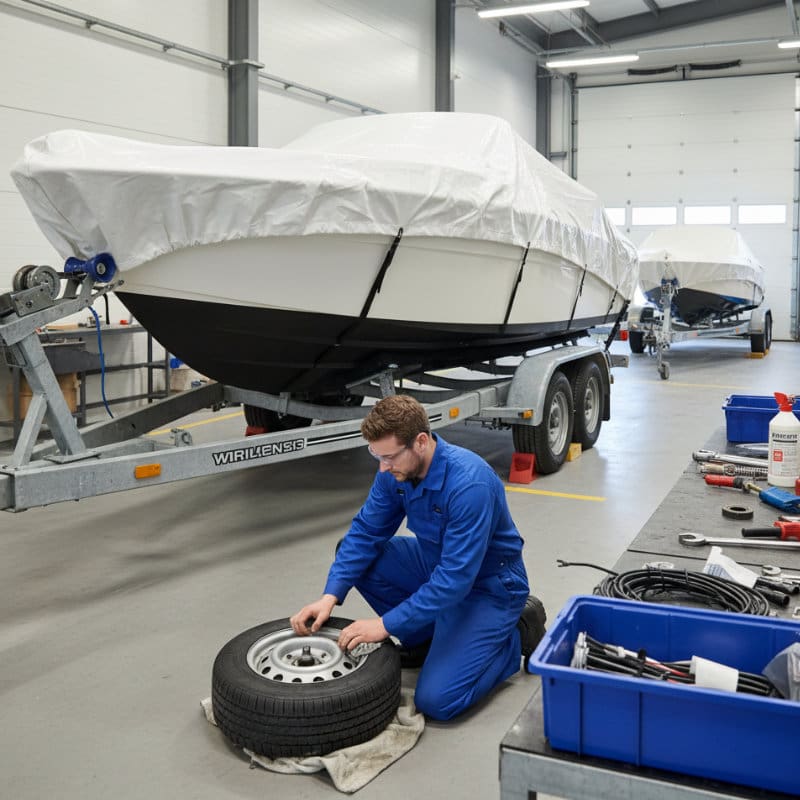
For many boat owners, all attention goes into the vessel—polishing the hull, changing the engine oil, updating electronics—while the trailer sits quietly under the boat, largely ignored. Yet your trailer is just as crucial to safe and stress-free boating as the engine that powers you across the water. A poorly maintained trailer can lead to breakdowns, dangerous towing situations, and even the loss of a boat on the road. Regular trailer servicing isn’t just good practice; it’s essential.
The Hidden Workhorse of Boating
Your trailer carries the full weight of the boat, absorbs bumps from every pothole, and deals with repeated immersion in freshwater or saltwater. It’s exposed year-round to road grit, surface water, corrosion, and UV damage. Unlike a car that racks up kilometres daily, a trailer often sits idle for long periods, which can actually accelerate wear—especially to bearings and brakes.
Despite all this, trailers are often overlooked. Many issues only become obvious at the exact moment you don’t want them—on the slipway or halfway down the motorway with your boat in tow.
Start With the Wheel Bearings
Wheel bearings are the most common point of failure. Immersion in water, especially if the bearing seals are worn, can wash out grease and let water in. Rust, overheating, and ultimately bearing collapse can follow.
A proper service includes removing the hubs, cleaning and inspecting the bearings, replacing any pitted or damaged components, and repacking with high-quality marine grease. Bearing protectors or “Bearing Buddies” help keep steady internal pressure and fresh grease, but they aren’t a substitute for a real inspection.
Brakes: Frequently Forgotten, Always Important
If your trailer has brakes—and many over 750 kg do—they must be inspected annually. Brake cables seize, shoes delaminate, and drums rust from the inside. Overrun couplings can stiffen or become sloppy, affecting stopping power and stability.
A full brake service checks:
- Brake shoes and pads
- Drum or disc condition
- Overrun hitch operation
- Handbrake function
- Brake cable movement
- Hydraulic fluid (if fitted)
Good trailer brakes massively improve towing confidence and safety.
Lights, Wiring, and Plugs
Boat trailer lighting suffers immensely from immersion and vibration. Corroded bulb holders, damaged wiring, and failed LED units are standard issues. During servicing, all wiring should be tested, connectors cleaned, and faulty units replaced. Consider sealed LED lights for better longevity—especially if you launch frequently.
Tyres and Suspension
Trailer tyres age long before they wear out. Sidewall cracking, flat-spotting, and UV degradation are common. Always check:
- Tyre age (anything over 5–6 years should be replaced)
- Correct pressure
- Tread condition
- Suspension units for rust, sagging, or broken rubber
A blowout while towing a boat is something every owner wants to avoid.
Chassis, Rollers, and Hardware
Inspect the frame for cracks, rust, and loose or missing bolts. Rollers should spin freely without flat spots. Winches must be checked for smooth operation, with frayed straps replaced immediately. Safety chains and shackles should be corrosion-free and rated for the load.
Regular Servicing Saves Time, Money, and Stress
A properly serviced boat trailer makes every journey safer and every launch smoother. It prevents expensive roadside failures and protects the boat you’ve invested so much in. Most experts recommend a full service at least once a year—more often if you’re launching regularly in saltwater.
Take care of your trailer, and it will take care of your boat. It’s the quiet workhorse of your boating lifestyle—don’t let it be the weakest link